


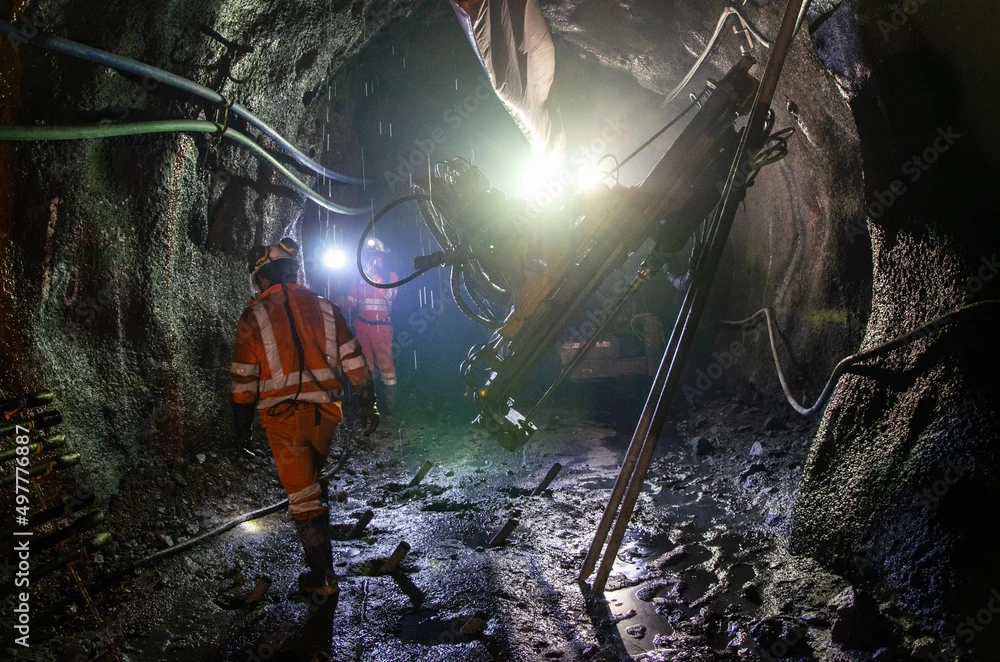
An operating underground mine had no reliable view of the state of its remucks. Fill level, material type and availability of each bay were reconstructed by hand: visual estimates, radio calls, compilation in a spreadsheet. The mandate was to produce a continuous estimate of the inventory in each remuck from the sensors already present on site, and to make it readable at the moment haulage decisions are taken. The starting constraint ruled out any added instrumentation on the remucks.
The job is not to instrument the mine. It is to fuse what the mine already produces and does not use.
The data already exists
| Scope | Fusion of existing data sources, estimation model and display |
| Deliverable | A platform that continuously estimates the contents of each remuck from the equipment and sensors already in place |
| Target | Reduce waiting and unnecessary travel for the production trucks |
| Stakeholders | Loader and truck operators, shift supervisors, haulage planners |
| Starting constraint | No instrumentation added to the piles |
The challenge: a critical link that nobody can see
Between mucking at the stope and loading the trucks, the remuck is a critical link that nobody can see. It decouples the shuttle loader, confined to the back of the stope, from the production truck, which needs clear space to manoeuvre. It also separates ore from waste, and any confusion between the two is paid for in dilution at the mill.
Yet the actual state of each bay is reconstructed by hand. The operator estimates by eye, calls it in by radio, the supervisor compiles, the planner transcribes. The accuracy of this tracking is low, by the teams’ own admission. The result is trucks arriving at an empty remuck, loaders blocked by a full one, and production decisions based on an inventory that is already out of date.
The constraint: nothing can be added to the piles
The intuitive answer would be to measure directly, with a fixed LiDAR or a dedicated scale for each bay. That is rarely viable: remucks move, the environment is harsh, and the cost per pile quickly becomes prohibitive. The estimate therefore has to work with what already drives through and what is already installed.
The approach: count the transactions rather than measure the piles
Estimating the inventory
- Continuous transactional calculation: every deposit and every withdrawal is reconstructed from equipment positioning, loader telemetry and hydraulics, and bucket counts.
- Bay identification: reading a code at the entrance removes any ambiguity about which remuck is active, including for temporary areas.
- Onboard weighing in differential mode: the empty load and the full load of the same truck are compared, because impacts throw the sensors out of calibration and make the absolute value unreliable.
- Periodic recalibration: a direct observation of the actual level brings the counter back to a measured value and contains the drift inherent in any transactional system.
- An estimate, not a single value: every output carries its confidence level.
Detecting and alerting
- Presence detection: a minimum dwell time determines whether a stop counts as an operation.
- Material check: the match between the material deposited and the type expected in the bay is verified, and the alert reaches the cab before the dump rather than after the fact.
- Saturation thresholds: each bay signals that it is approaching capacity, before a shuttle loader finds itself blocked there.
Reconciling and displaying
- Continuous comparison with the mill: the estimated inventory is checked against actual weights, which makes the gaps visible instead of letting them dissolve into month end totals.
- Correction for fragmentation: converting volume to tonnage takes into account fragment size, which influences the bulk density of the material.
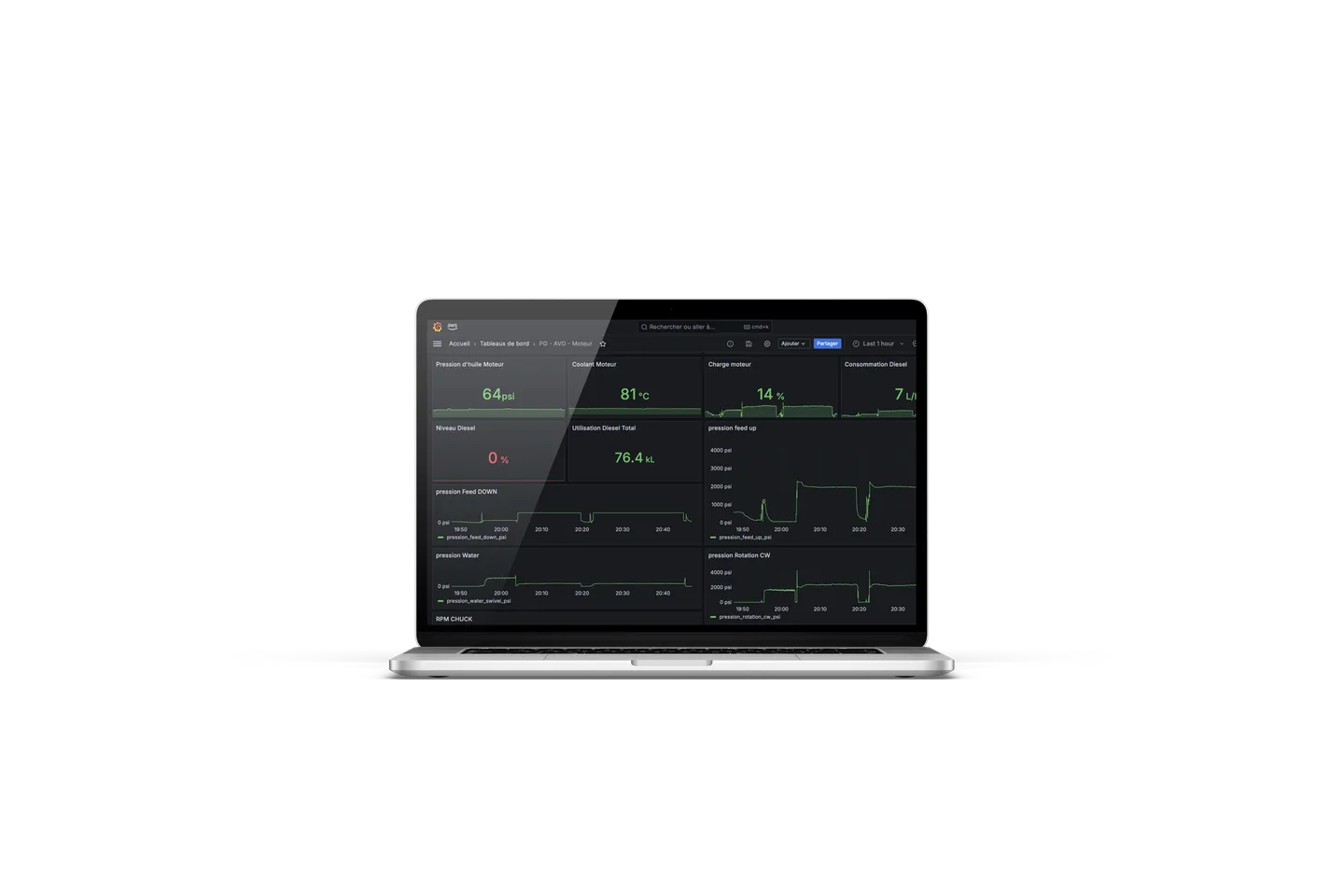
- A single picture of the inventory: the estimate, the material type, the active equipment and the current alerts are displayed by bay, for the operator, the supervisor and the planner.
What the user can change
| Data sources | Equipment positioning, loader telemetry and hydraulics, code reading at the bay entrance, LiDAR scan on pass by, onboard weighing in differential mode |
| Area geometry | Capacity of each remuck, alert thresholds, treatment of temporary remucks |
| Estimation model | Weight per bucket and associated uncertainty, visit detection rules, minimum dwell time |
| Recalibration | Method and frequency of the reset, which govern the residual drift tolerated |
| Economic assumptions | Minutes saved per trip, number of trips, fleet size, tonnage per trip, grade and metal price |
What the work showed
- The data already exists: five sources are enough, all of them from systems present or accessible on site.
- Fragmentation is not simply a quality issue: a pile whose volume is known but whose fragmentation is not gives a biased tonnage, and that bias propagates into the tracking of tonnes mined per stope.
- The alert has to arrive before the action: a wrong assignment detected after the dump is a contamination to deal with. The same detection sent to the cab before the dump is a dump that never happens.
From a few minutes per trip to dollars
Better visibility of the inventories avoids empty runs and waiting, which takes a few minutes off the cycle time of a trip. Those minutes convert into additional trips per day per truck, then into tonnes, then into ounces once the grade is applied, then into dollars at the metal price.
The sensitivity is high: multiplying by fleet size and by the number of shifts quickly amplifies the effect of a starting assumption. The model therefore gives an order of magnitude, to be revisited with the site’s own values.
The impacts
Before. The remuck inventory is reconstructed by eye and by radio, and haulage planning works from an image that is already out of date.
After. Each bay carries a continuous estimate, with a confidence level attached, visible at the same time to the operator, the supervisor and the planner.
In the field, the tool settles questions that until now had no reliable answer.
- Which remuck to send the next truck to, and in what order, to avoid empty runs.
- When a bay is approaching saturation, before the shuttle loader finds itself blocked there.
- Whether the material deposited matches the type expected in the bay, before the dump rather than after the fact.
- What gap separates the estimated inventory from the mill’s actual weights, and where it comes from.
- How many tonnes actually came out of each stope, once the volume to tonnage conversion is corrected.