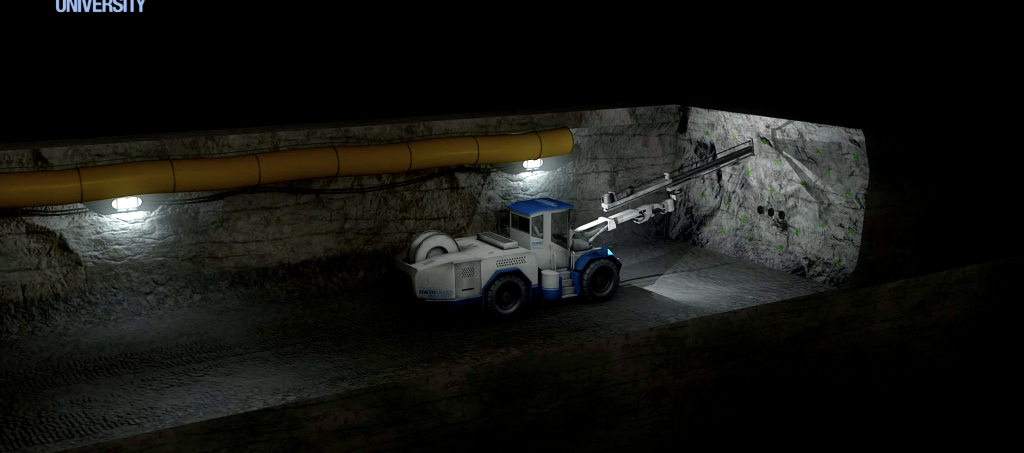
Introduction: a new tool, or a new teammate?
Like you, we spent a long time dreaming of a collaborator able to understand our voice, our style and our intent, and turn raw ideas into a structured message. Today, thanks to artificial intelligence, that dream is within everyone’s reach. AI has become a kind of “invisible assistant”, able to generate text, draft a report or suggest lines of thinking in seconds.
But that capability raises a question: will AI replace human creativity, or amplify it?
In mining, where every minute of equipment availability counts and worker safety comes first, the distinction matters. Innovation doesn’t come from the tool alone, but from what is done with it. AI offers an unprecedented lever to cut repetitive, low-value work and free up time for what really counts: supporting field operations, anticipating failures and strengthening team resilience.
AI can learn to teach us
AI is one of the rare tools capable of teaching its own use. Unlike Excel or PowerPoint, which need outside training, generative models can explain how to interact with them better. Asking an AI model “What kinds of questions should I be asking you to get better availability on X type of mobile equipment?” starts a learning loop that improves the quality of the answers.
For non-technical professionals in mining, that changes things. A foreman, a maintenance engineer or a health and safety lead can hold a conversation with AI to understand how to automate a report, simplify a form or explore risk scenarios. AI becomes a guide that speeds up skill-building and lets people tap the technology’s potential without depending on deep IT expertise.
The key is in the phrasing: better questions generate better answers. In a mining context, that might mean “What data do I need to collect to predict a failure on shovel X or Y?” or “How do I present this emissions report clearly and in line with ESG standards?”
Don’t use AI — work with it
Many organizations still see AI as a simple tool. You ask it for a task, it gives an answer. But research out of Stanford shows the best results come when you treat AI as a teammate.
On a human team, when a colleague brings back imperfect work, you don’t throw it all out: you give feedback, suggest adjustments, iterate together. The same logic applies to AI. A model that returns a mediocre answer can be “coached” with extra instructions, concrete examples or rephrasing.
In mining, this approach is essential. AI watching sensors on a stacker can spot an unusual vibration. But it’s the operator who, in dialogue with the AI and by validating the hypotheses, turns that signal into concrete action. AI proposes, the human decides. That pairing is what turns AI into a genuine operational lever.
Inspiration is a discipline
Creativity doesn’t come only from chance, but from regular practice. Put another way, the quality of the ideas produced depends on the inputs we supply.
In a mining context, AI gives everyone the same raw capability: ChatGPT and other models are available to all. What will make the difference is the richness of the data you feed them and the field expertise guiding their use.
A model fed with equipment failure histories, precise geological surveys or local environmental data will give far more relevant results than a model used without context. The mines that invest in structuring their data and in its quality will turn AI into an engine of applied creativity, able to generate useful, actionable insight.
What this means for the mining industry
AI won’t replace engineers, operators or executives. It will become an indispensable partner. The mines that build AI into how they work day to day — not as a gadget, but as a teammate they trust — will see the difference.
In safety, AI can anticipate incidents by spotting anomalies invisible to a human, but the intervention has to be validated by experts. In maintenance, it predicts failures, but planning shutdowns and prioritizing tasks still needs human judgement. In environment, AI generates compliant reports automatically, but it’s the overall ESG strategy that makes the difference.
Lasting value therefore doesn’t come from the tool in itself, but from how mining teams work alongside it.
Practical recommendations
To get the full benefit of AI, mining companies and their partners need to invest in training their teams. It isn’t only about learning to “use” AI, but about knowing how to work with it, give it feedback, co-create solutions.
Data has to be treated as a strategic resource. Collecting, cleaning, structuring and protecting that data is the prerequisite for AI to generate value.
Finally, company culture has to encourage iteration and experimentation. Teams need to test, give feedback, refine the results continuously. It’s that improvement loop that turns a tool available to everyone into a distinct advantage.
AI as a partner in creativity and lasting innovation
“I don’t use AI, I work with it.” AI shouldn’t be seen as a machine that replaces, but as a teammate that amplifies.
In mining, tomorrow’s leaders won’t be the ones who simply “adopted” AI, but the ones who made it a partner in creativity and collective decision-making — able to free up time from repetitive work and focus the effort on equipment availability, safety and lasting performance.