Is AI an overrated promise in mining?
For a few years now, artificial intelligence has dominated every conversation about the industry’s future. It is credited with revolutionary capabilities: optimizing operations, transforming safety, cutting costs, meeting environmental requirements. The pitch is appealing, and sometimes presented as a silver bullet. But behind the enthusiasm, a question remains: does AI really give mining companies and their suppliers a lasting competitive advantage?
The reality is more nuanced. Yes, AI is a powerful lever. Yes, it will transform practices. But no, on its own it doesn’t deliver a durable advantage. As with every technology wave, what counts isn’t the tool, but how it’s built into a strategy, a culture and a business model.
Why AI alone isn’t enough
Access to AI is now democratized. The models, the algorithms and the platforms are available to every company, from the large international producer to the smallest contractor. Cloud solutions, APIs from major vendors and specialized software make the technology accessible at low cost.
That means an innovation based on raw AI alone can be copied or bought quickly by a competitor. A predictive maintenance model or a logistics optimization algorithm therefore doesn’t, by itself, create a lasting advantage.
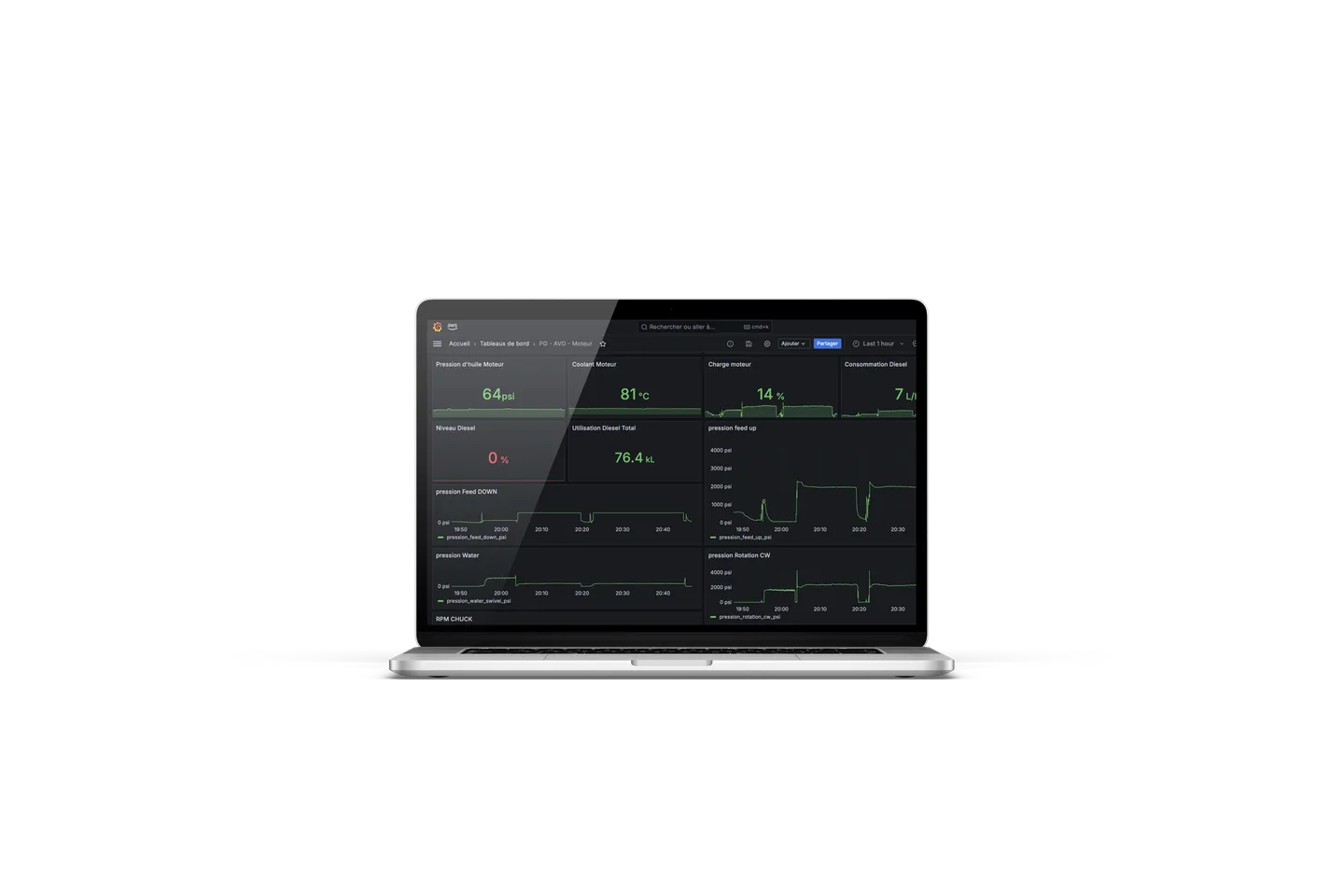
Without a clear strategy and without alignment with operations, AI stays an isolated experiment. We already see mines installing sensors and accumulating data, but with neither the infrastructure nor the governance needed to exploit it anywhere near what you might imagine. The result: a lot of effort, limited impact.
Competitive advantage comes from how you integrate it
The real difference doesn’t come from the technology, but from how it’s woven into the company’s operational and cultural fabric. Two mining companies can buy the same AI solution for their conveyors. One collects the data but never structures it, and struggles to convince its field teams to use the generated reports. The other invests in data quality, trains its operators, and folds the results into its strategic planning. The outcome is clear: only the second gets a real and lasting advantage.
AI therefore becomes a competitive weapon only when it’s paired with three things: proprietary, well-structured data; clear governance ensuring quality and security; and adoption by the field teams. Without those conditions, AI stays an impressive but barely transformative technology.
Concrete applications in mining
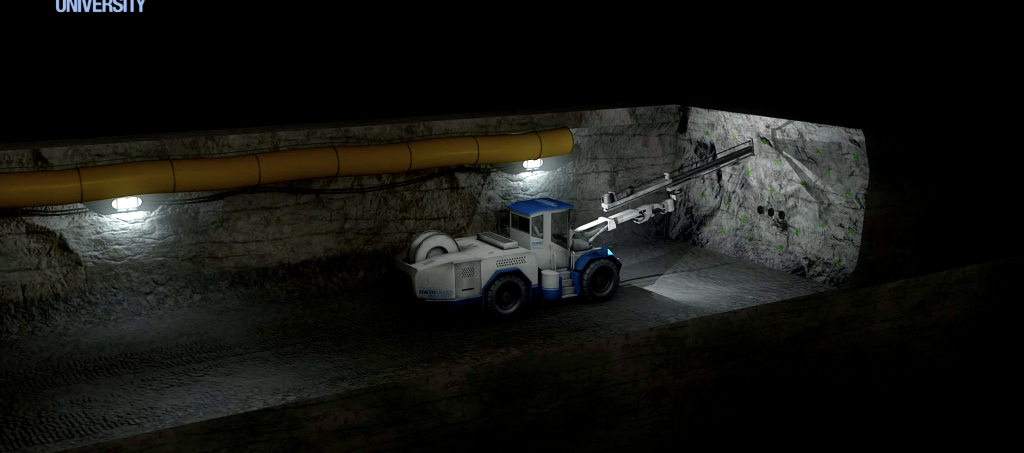
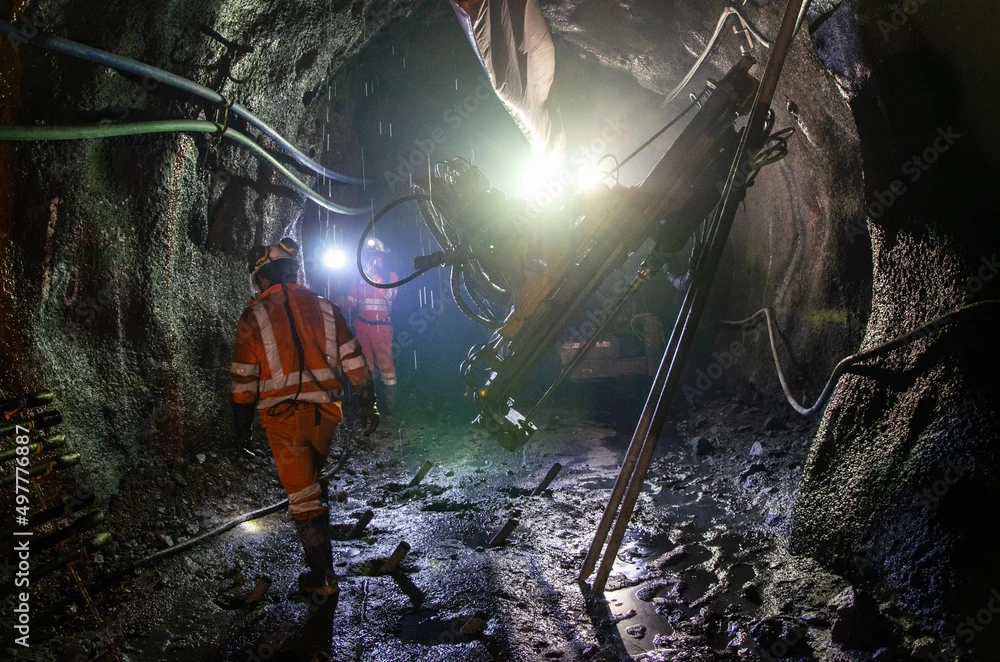
There is no shortage of use cases, and they show AI’s potential when it’s properly integrated. In safety, AI can analyse sensor signals in underground drifts in real time and detect anomalies invisible to the human eye. In maintenance, predictive algorithms applied to conveyors, jumbos or pumps reduce unplanned stoppages and extend equipment life. In environment, AI helps anticipate emission peaks, adjust processes and automate increasingly demanding regulatory reports. And in logistics, it makes it possible to optimize transport flows and fleet management, factoring in weather, energy or infrastructure availability.
These examples show that the value isn’t in the algorithm itself, but in the ability to capture, structure and exploit the data so it becomes a strategic asset.
Where lasting advantage actually comes from
If AI in itself doesn’t create a lasting competitive advantage, certain practices do. Proprietary data is the first lever: the more unique, well-structured, categorized and protected it is, the more it gives the company an asset that’s hard to reproduce. Field adoption matters just as much: a tool only has value if the operators understand its usefulness and actually use it day to day.
A culture of collective decision-making also plays a central role. AI should be used to inform decisions, not replace them. By creating a loop where data and technology enrich human judgement, organizations strengthen their resilience.
Finally, the ability to continuously improve processes with these tools becomes a distinguishing mark. A mine able to adjust its practices continuously will always stay ahead of one that implements an AI solution once and stops there.
Strategic recommendations
For AI to become a tangible advantage, you have to start with a data-led strategy. Before buying solutions, leaders need to invest in collecting, structuring and improving the quality of their data. Next, it’s essential to deploy targeted pilots that demonstrate value quickly: a predictive maintenance project on one critical conveyor, for example, can prove concrete impact within months.
In parallel, you have to invest in training and familiarizing the teams, so AI is seen as a help rather than a threat. Finally, companies need to build solid partnerships with suppliers and integrators who understand both the technology and the reality of the mining field. That combination is what turns a promise into a concrete advantage.
From fascination to real value creation
Artificial intelligence does not, in itself, create a lasting competitive advantage. The models and algorithms are available to everyone, and the window in which an innovation based on AI alone can differentiate a company keeps getting shorter.
Real advantage is built in the winning combination: quality data, operational integration, a culture of adoption, and continuous execution. That is the alchemy that will let mining companies and their suppliers turn AI into a collective and lasting lever.
By 2035, the sector’s leaders won’t be the ones who bought the best models, but the ones who managed to make AI a common language between their data, their teams and their decisions. Those are the ones who will build a competitive advantage their rivals will struggle to catch.