Features

What your crews hold in their hands, and what you see at the office

A mobile app for the field, a web portal for management, and the information that flows between the two.

Mobile app

In the field

What operators and supervisors use, wearing gloves, underground, with or without a network.

01 / 07

The right form, opened by a code on the machine

A code affixed to the asset opens the form for that equipment, for that trade. The ID, date, time and location fill themselves in.

Numeric readings, choices, lists, free text, signatures: each item expects the answer format that suits it.
02 / 07

The three formats that carry the most weight in the field

A photo settles an ambiguity, a short video shows a movement, a voice note conveys the context and the perceived urgency.

Everything attaches to the report, timestamped and positioned, with no extra step.

03 / 07

Report a condition in seconds

Event type, priority, asset involved: the typology is preconfigured for each trade, so there's nothing to look for.

The report goes out with its evidence and its location, online or offline.

04 / 07

Everyone sees only what concerns them

Their forms, their reports, their tasks. Nothing else on screen, nothing to filter.

For the site, there's only one app to deploy, teach and support, however many trades there are.

05 / 07

What's assigned, what's in progress, what's left

The operator sees their tasks with their workplace and priority, and reports progress, time and quantities right on the task.

The same data then feeds payroll and operations systems, with no re-entry.

06 / 07

Their crew's status, live, from the field

The supervisor sees what each person has reported, completed or left pending, without waiting for the end of the shift.

They validate, prioritize and reassign from their device, while there are still hours left in the shift.

07 / 07

Data entry is guaranteed, even with no network

The app works offline and syncs as soon as a connection is available, with no loss of information.

Location is captured by GPS or beacon at the moment of entry, placing the event without anyone having to specify it.

Web portal

At the office

What lets you configure the site, track activity and draw an overall picture from it.

01 / 09

Everything that's moving, summed up in one place

Events, tasks, reports and forms in a single overview, sorted by priority.

You filter by type, sector, crew or period, and open the details in a single click.

02 / 09

Each trade tracks what matters to it

Maintenance tracks its anomalies by equipment, health and safety its conditions and rounds, production its progress and quantities.

The numbers are no longer up for debate, because they all come from the same field entry.

03 / 09

Your teams build and evolve their own

We start with the forms you already have, then each trade builds the rest itself.

A requirement changes, a machine arrives: the form adjusts in days, with no IT project.

04 / 09

From creation to resolution

Tasks are created manually or from an event, assigned to a crew or a person and linked to an asset.

Recurring templates save you from recreating every week what comes back every week.

05 / 09

Your ways of working, encoded once

You define your rules from field conditions: event type, priority, status, sector.

They then apply to every event, the same way, regardless of who's on duty.

06 / 09

The report builds itself while the work gets done

Every completed form becomes a searchable report, sorted by type, status and owner.

It's shared as is, with no layout work or manual compiling.

07 / 09

Every asset carries its own file

Mobile equipment, vehicles, infrastructure and inspection points, with their actual condition and location.

The history per asset lets you plan the repair before the breakdown rather than after.

08 / 09

See where the issues are

The underground map positions events and assets by level and by drift.

The surface map works the same way, with its own sectors and information layers.

09 / 09

Your crews, your sectors, your codes

Each site configures its structure: work crews, sectors and levels, compliance and safety codes.

The destinations information is routed to are defined in the same place, once.

We don't replace your systems. We give them what they're missing

Your maintenance system, your ERP, your planning tools and your health, safety and environment systems stay in place and keep doing what they do well. What they're missing is reliable field information that arrives on time.

Spotd captures that information at the source, once, in the format each destination expects. And nothing is sent to them without being validated by a supervisor. That validation is what separates usable data from a stream of raw reports.

You keep your systems, your processes and your rules. What changes is the quality and the timing of what feeds them.

Your systems, your rules. We take care of what feeds them

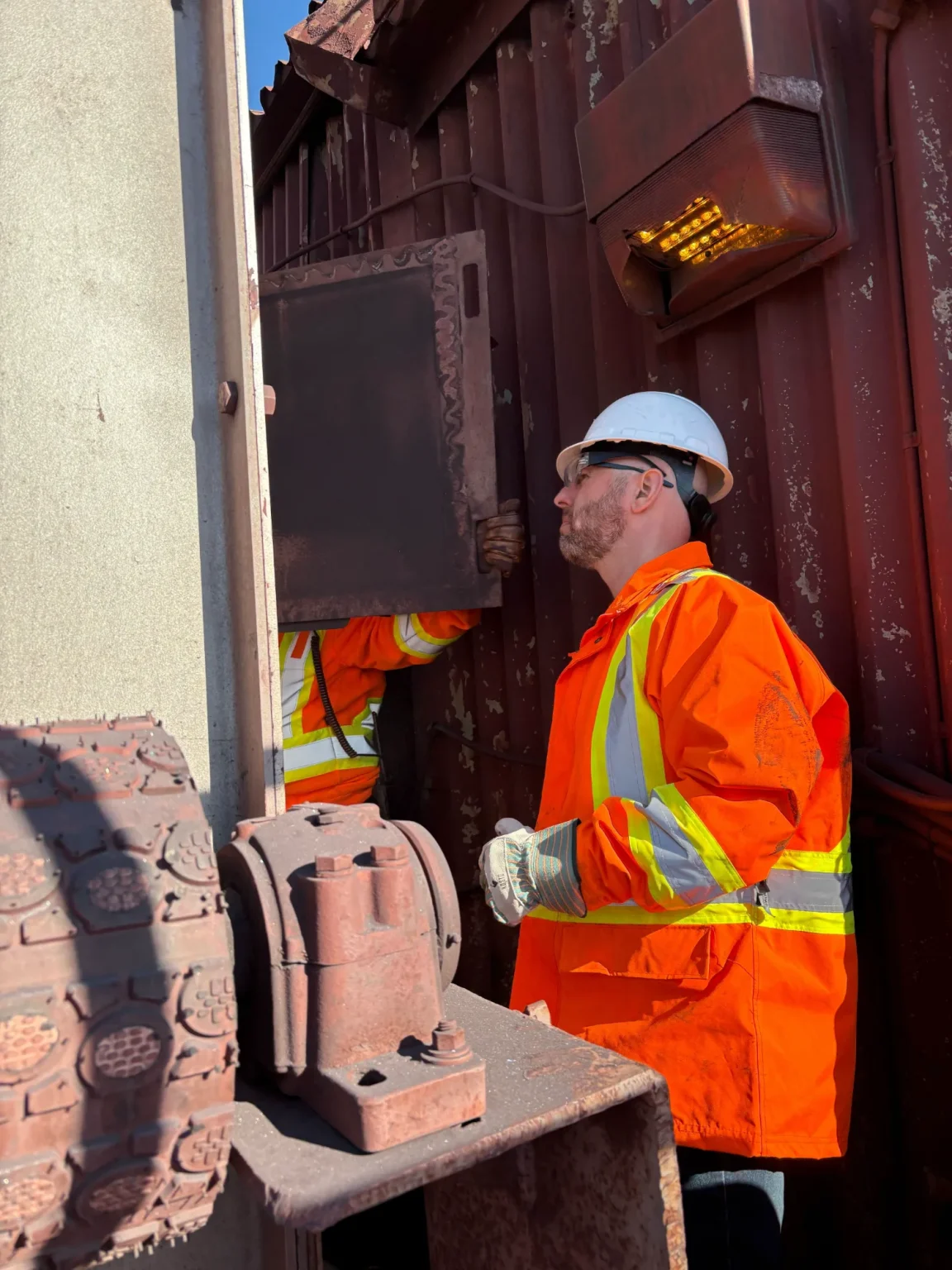
Worker in high-visibility clothing inspecting equipment on site.